A New Era in Art: Technology and Art
For thousands of years, humans have expressed their thoughts, emotions, and experiences through art. Until recently, traditional art, created physically solely through artistic skills, was the standard; whether we like it or not, technology has now begun to shape it.
Artificial intelligence is developing at an astonishing pace and is integrating seamlessly into many fields. This can lead to thoughts that certain professions might soon disappear and can create anxiety in some people about losing their jobs. However, rather than succumbing to these worries, it is far wiser to closely follow technological developments, get to know them, and try to incorporate them into our lives. By keeping up with current advancements, we can realize that AI can be used not only as a personal assistant to ease our work but also as a method to free our minds and enhance our creativity. Although adapting to constantly evolving technology can sometimes be challenging, it is important to remember that it can often be enjoyable as well. The impact of AI on education and art represents the fun and personally developmental aspects for us.
The Convergence of AI and Art
For thousands of years, humans have expressed their thoughts, emotions, and experiences through art. Until recently, traditional art, created physically solely through artistic skills, was the standard; whether we like it or not, technology has now begun to guide it. First came cameras and photography, then digital artworks and digital prints created with computer programs, followed by hyper-realistic visuals and animations produced using CGI (Computer Generated Imagery) with 3D design programs. In addition, 3D printing machines have brought innovation to countless fields such as architecture and medicine and are now appearing in artistic productions like sculptures and reliefs.
While we have been trying to adapt to all of this, artificial intelligence (AI), which has recently entered our lives, has disrupted the art world and has already begun shaping the future of art. Rapidly advancing AI technology has become an actively used tool in artistic production. AI allows ordinary people to create art using their imagination while serving as a tool for artists to further enhance their creativity. Generating images with AI may not be entirely new, but the fact that platforms accessible to everyone are now available at affordable prices and widespread is a current phenomenon.
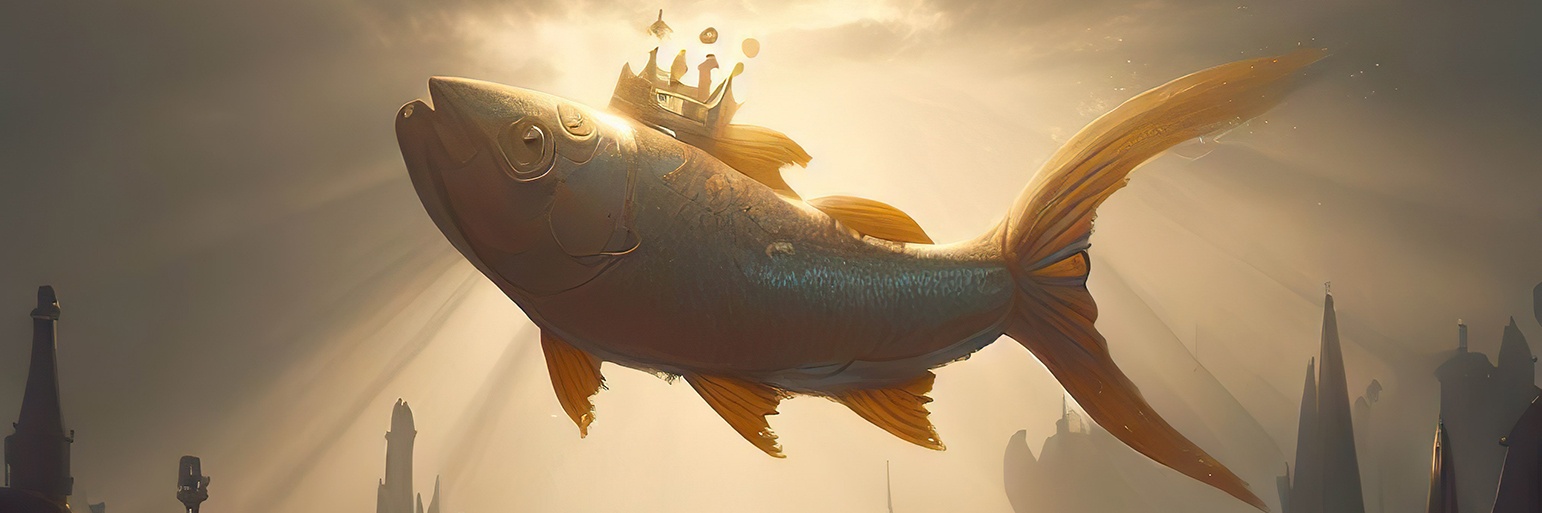
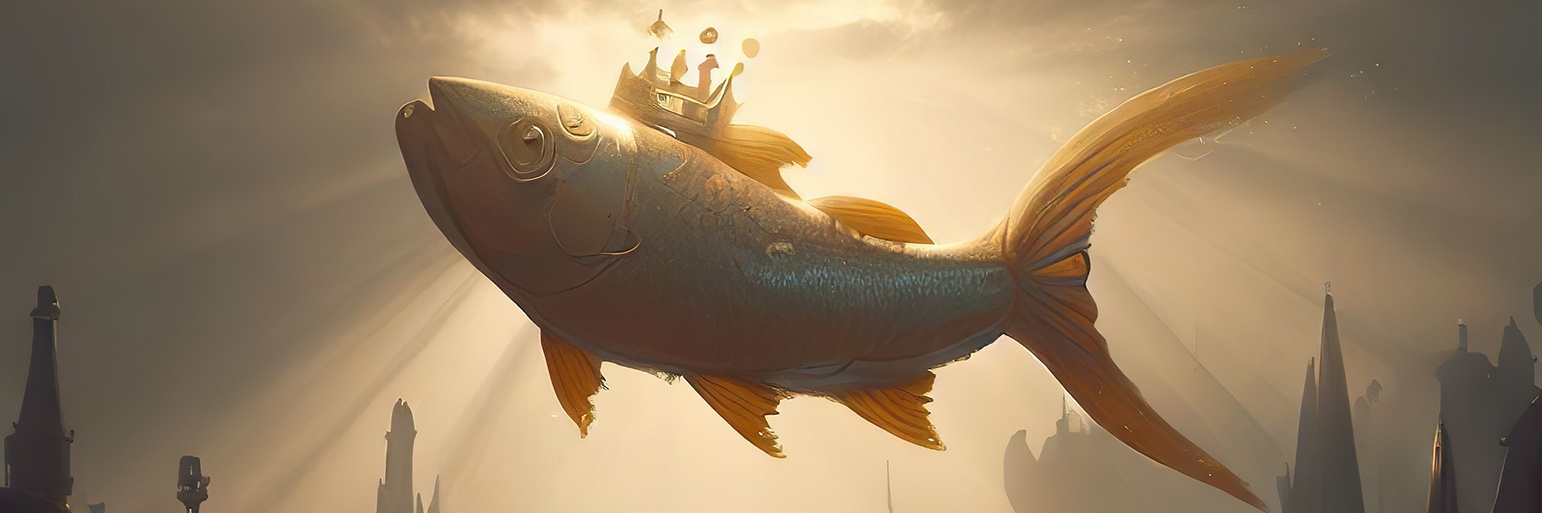
You can describe a text in detail and ask AI to visualize it or describe an image you have. If you haven’t tried it yet, the results will impress you. Using applications such as DALL-E 2, NightCafe, Jasper Art, or Bing Image Creator, you can try creating your own artwork. For example, we created an image through Bing Image Creator with the following description and obtained the result below:
"In the middle of a medieval city square, a giant crowned fish flies through the air, glowing in gold, blue, and green. A river flows beneath the fish, and sunlight reflects off the water and stone pavement. The scene depicts sunrise in winter with snow and birds. This image combines elements of Paris and Istanbul with richness in shades of gray and post-human/post-reality themes."
The World of NFTs and Art
NFTs (non-fungible tokens) are a type of digital asset stored on a blockchain. Unlike cryptocurrencies, which are interchangeable and have a set value, NFTs are unique and can represent specific items such as artworks, music, or even tweets.
NFTs have become quite popular in the art world over the past few years. Platforms like Foundation, OpenSea, Rarible, and Nifty Gateway are popular marketplaces for buying and selling these digital assets. The works you purchase from these platforms can also be considered an investment. In today’s art world, they represent a digital, easily accessible, and widespread version of the works that collectors acquire for investment purposes. Of course, productions created or enhanced with AI can also be sold and acquired as NFTs.
The ability for artists to sell their digital works as NFTs allows them to earn income without waiting for recognition solely from physical art galleries or the traditional art community. By selling on these platforms, anyone can access works that speak to them, enabling artists to make a living. Artists retain ownership of their work, so even after selling pieces to collectors, they can earn a percentage from each resale. This represents a new era of digital ownership and the art world, freeing artists from the limitation of producing work only to appeal to general taste.
Different Perspectives on Digital Art
Some argue that digital art’s ease of replication and production undermines the essence of art and leads to commercialization. Many believe that much of the content on digital platforms cannot truly be considered art. However, for the new generation born and raised in the digital age, the existence of digital art and platforms is indisputable, and these critical views are likely to lose influence over time.
This rapid production may create the illusion that art and artists lose their uniqueness, but we believe that a true artwork always distinguishes itself. In our view, whether produced digitally or traditionally, defining a work as art depends on the magic between the artwork and the viewer. From prehistoric times, through the Middle Ages, to today’s technological era, art will continue to illuminate our emotions.
Discover