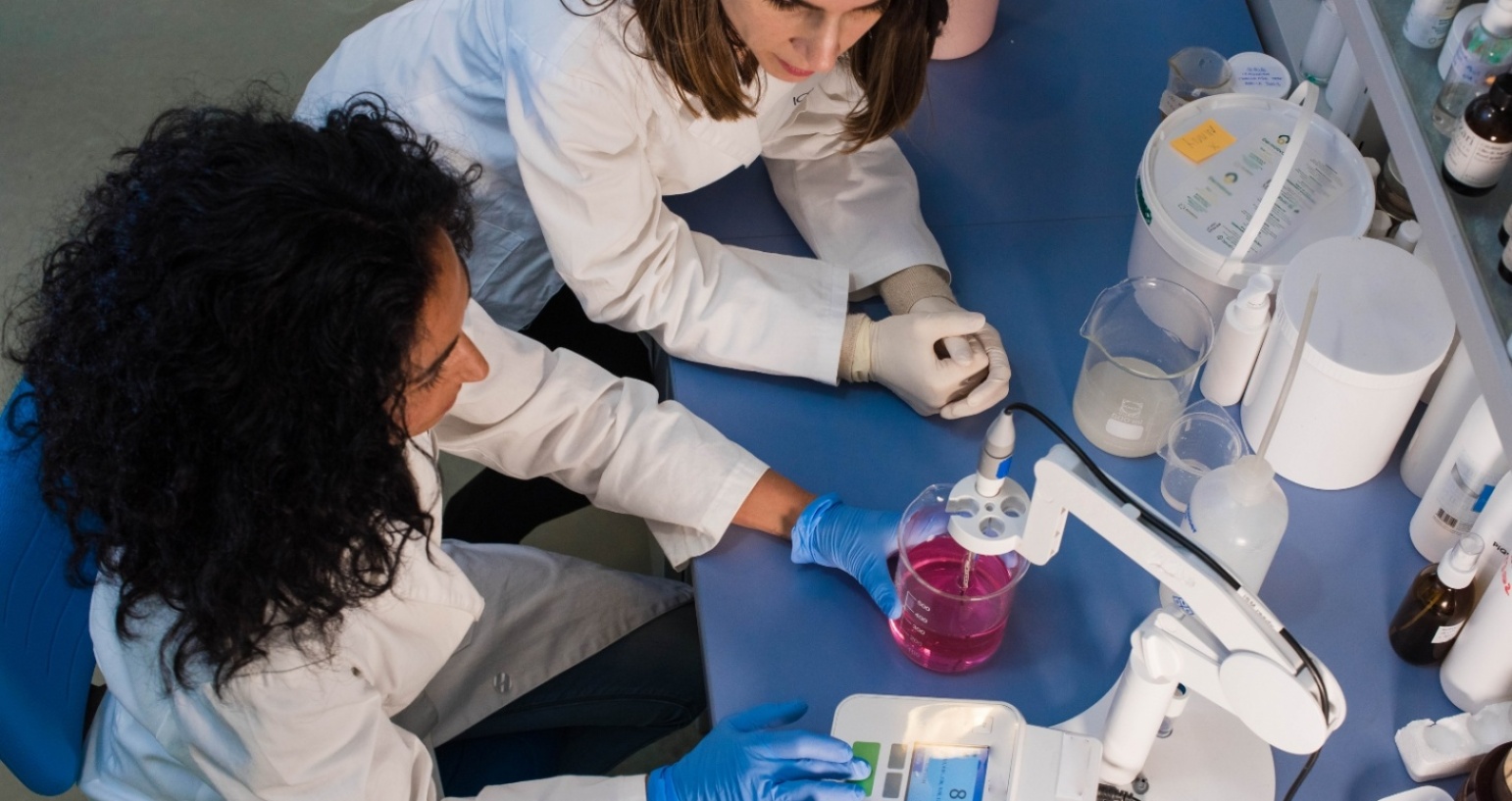
6 Steps to Encourage Girls in Science
Among the social factors that prevent girls from succeeding in science are gender stereotypes, inequality of opportunity in education, and the lack of female role models. Therefore, by providing scientific activities and educational toys at an early age, girls can be encouraged to discover and develop their talents in science. In addition, emphasizing their value in society to help them gain self-confidence will carry us toward a more modern society. Social awareness must be created so that girls become aware of their own abilities and rights, take their capacities seriously, and believe that they can receive an education in science and achieve great things. In this way, girls’ interest in science can be increased, and a hopeful environment can be created for them to succeed in science in the future.
Early Activities and Toys: By offering scientific activities and toys to girls at an early age, their talents in science can be nurtured. Fun ideas such as allowing them to conduct experiments with chemistry or lab sets, sparking curiosity through science books and stories, developing basic skills with robotics or programming toys, or gifting a microscope for exploring natural sciences will help them feel closer to science.
Creating Awareness: It is extremely important that girls’ talents are not underestimated by themselves or their parents, and that the belief that they can build a successful career in science is reinforced. Encouraging talented girls in science gives them inspiration to overcome the destructive effects of gender stereotypes and enables them to discover their potential.
Equal Opportunities: Girls should be provided with equal opportunities in science, just as in other subjects. This will positively influence their future career choices and contribute to raising awareness about gender equality in society.
Supportive Environment: When girls intend to work in science and engineering, they may feel like a minority and fear discrimination. Therefore, it is necessary to instill in children the idea that science is not only for men and that engaging with science is beyond gender, thus creating a supportive environment.
The Importance of Role Models: Regardless of gender, children should be introduced to the stories of successful scientists. A generation educated with these role models will grow up aware of the presence of successful women scientists. This approach is an important step toward ending gender discrimination and building a more equal society. Introducing girls to women scientists as role models will also encourage and motivate them to succeed.
Social Awareness: Beyond the education children receive in institutions, the most important factor shaping their self-confidence and determination is their family and social environment. Therefore, girls’ success in science can only be achieved through educating society. Through projects carried out by municipalities, families can be informed about the role of women in science and how girls will carry us to a brighter future.
The Achievements of Turkish Women Scientists
Since its foundation, the Republic of Turkey has valued and honored women. In our Republic, which was the first to grant women the right to vote, our successful scientists who have made their names known worldwide continue to make us proud with their achievements.
Safiye Ali
Safiye Ali is a very good example as Turkey’s first female professor of mathematics. Born in Istanbul in 1894, she was the Republic of Turkey’s first female medical doctor and the first woman to provide medical education. She also conducted studies on maternal and child health and participated in the feminist movement, fighting for Turkish women’s right to be elected. By opening a clinic in Istanbul, she practiced medicine and led the “Milk Drop Nursery,” which was founded for children deprived of sterilized milk and breastfed infants, pioneering health efforts for children.
Türkan Saylan
As a doctor, academic, writer, and educator, Türkan Saylan made great contributions to the scientific world. She was one of the founders of the Association for Supporting Contemporary Life, which aimed to support Atatürk’s principles and reforms in Turkey. Saylan worked on leprosy throughout her life and served as an advisor to the World Health Organization on leprosy until 2006. She also founded the Leprosy Fighting Association and Foundation, and in 1986, she was awarded the “International Gandhi Award” in India. Türkan Saylan’s pioneering role in education and lifelong support for girls’ education make her worthy of commemoration on this special day.
Özlem Türeci
One of our successful women scientists frequently mentioned during the pandemic is Özlem Türeci. A German immunologist, entrepreneur, academic, scientist, and businesswoman of Turkish origin, Türeci is an experienced researcher in cancer studies. She played a leading role in the development of the COVID-19 vaccine and is the Chief Medical Officer and co-founder of the biotechnology company BioNTech. In addition to her scientific work, she continues her academic career as a faculty member at Johannes Gutenberg University in Mainz.
Canan Dağdeviren
Canan Dağdeviren, a Turkish physicist and academic, is the LG Career Development Professor of Media Arts and Sciences at the Massachusetts Institute of Technology (MIT). Despite her young age, she has drawn attention with her achievements. She was the first Turkish scientist to become a Junior Fellow of the Harvard Society of Fellows. At the United Nations’ International Day of Women and Girls in Science celebrations in February 2018, Dağdeviren stated that in addition to her work in materials science and engineering, she aims to inspire young women and future generations pursuing careers in STEM.
Gizem Gümüşkaya
A graduate of Istanbul Technical University’s Faculty of Architecture, Gizem Gümüşkaya discovered her interest in biology while pursuing her master’s studies in the United States and quickly achieved great success in her field. She is a bold and innovative synthetic biologist and architect. Focusing on synthetic morphogenesis in her research, Gümüşkaya completed her PhD at Tufts University and Harvard University’s Wyss Institute for Biologically Inspired Engineering. With her multidisciplinary approach combining design and biology, she has worked on topics ranging from small-scale biological robots to carbon-negative buildings. Along with her scientific group, Gümüşkaya developed nanorobots made from human cells. Her work has shown that damaged nerve tissues can be repaired and that synthetic biological robots can construct themselves from seed, just like natural structures.
Despite changing her career path, her major achievements in science make Gümüşkaya a role model for girls devoted to science.
Women Scientists Who Made History Around the World
The world of science has witnessed many important discoveries and developments for centuries. Women scientists have made valuable contributions to science through their important work in their fields. For example:
-
Marie Curie was the first woman scientist to win two Nobel Prizes for her work on radioactivity.
-
Rosalind Franklin played a crucial role in discovering the structure of DNA.
-
Elizabeth Blackwell, the first woman in the world to earn a medical degree, encouraged women’s education in medicine.
-
Rita Levi-Montalcini won a Nobel Prize for her research on nerve growth factors.
-
Barbara McClintock, considered one of the world’s most important cytogeneticists, discovered transposons in plants.
-
Vera Rubin, an American astronomer, pioneered studies on galaxy rotation speeds and discovered that the universe is filled with dark matter.
-
Maria Goeppert Mayer was awarded the Nobel Prize in Physics for her nuclear shell model of the atomic nucleus, becoming the second woman after Marie Curie to win the Nobel Prize.
Countless other women scientists we cannot list here have played major roles in the advancement of science and made great contributions to humanity. As these examples show, ignoring women scientists with a sexist approach in science is unfair.
The work of women scientists, celebrated for their achievements, has raised and will continue to raise awareness on gender equality and greater representation of women in the scientific world.
Women and Girls in Science: Stars of the Future
The International Day of Women and Girls in Science on February 11 is an important day to celebrate the presence of women and girls in science, recognize their achievements, and fight against gender inequality. This special day continues to encourage women to take a greater place in science. In the future, more women scientists and girls will make significant contributions to the scientific world and make our planet a more livable place.