How Should Flooring Be Selected for Healthcare Facilities?
The materials chosen in healthcare facilities reflect whether the institution is capable of providing safe, high-quality, and comfortable care. Flooring materials have a significant impact on the interior environment of healthcare facilities.
How Should Flooring Be Selected for Healthcare Facilities?
The materials chosen in healthcare facilities reflect whether the institution is capable of providing safe, high-quality, and comfortable care. Flooring materials have a significant impact on the interior environment of healthcare facilities. Choosing the right flooring becomes an investment opportunity for the facility, as it contributes to positive healthcare outcomes throughout the lifecycle.
When selecting flooring for healthcare facilities, many factors must be considered. For example: which areas in the hospital require which type of flooring, whether the selected material is long-lasting, durable, or costly, what precautions are needed for cleaning and maintenance, and whether the material is suitable for the facility’s purpose. Many components like these will largely influence the choice.
Key Factors
Some of the performance characteristics required for appropriate use in healthcare facilities include antibacterial activity, infection/hygiene control, dirt retention/control, slip resistance, fire safety, acoustic control, indoor air quality, underfoot comfort, and cost of use. Flooring materials and their properties vary according to their class, and each category of materials responds differently to performance requirements.
For example, vinyl floors stand out with criteria such as durability, infection control, and low maintenance cost, while carpeted floors may be preferred for their therapeutic effects, comfort, and aesthetic qualities. Details such as how the material is joined are as important as the material itself. Flooring that uses thermal or heat-based bonding provides a sterile environment, which is critical in healthcare facilities where hygiene is essential. The area in which the material is used is another vital factor. Emergency rooms and operating theaters are areas where equipment is frequently moved and strong antiseptic liquids may be accidentally spilled, while patient care rooms carry a risk of bacterial growth. Selecting the right flooring for the right space is a crucial part of creating a high-quality care environment.
Best-Known Flooring Options
-
Vinyl Flooring
Vinyl flooring has been increasingly preferred in recent years for hospitals, clinics, and care homes due to the physical convenience it provides.
Commercial-grade rolled PVC flooring with usage class 34-41 features antistatic and antibacterial properties. These materials do not harbor bacteria or germs on their surfaces. Rolls of 2 meters in width can be heat-welded to create a homogeneous joint. Because the material is flexible, it allows for coved wall applications, minimizing seams and eliminating dirt-collecting points, which is critical for flooring in healthcare settings.
Vinyl flooring is available in compact, acoustic, and compact-acoustic classes. In high-traffic areas such as patient rooms and corridors, different features can be selected depending on the preference.
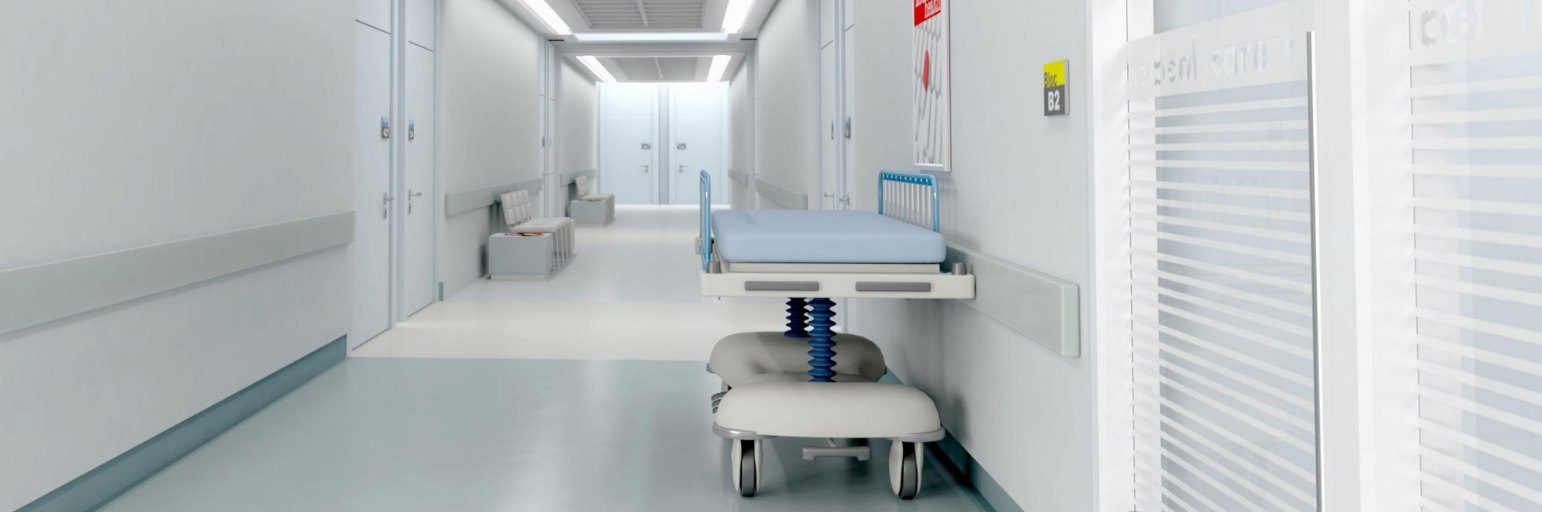
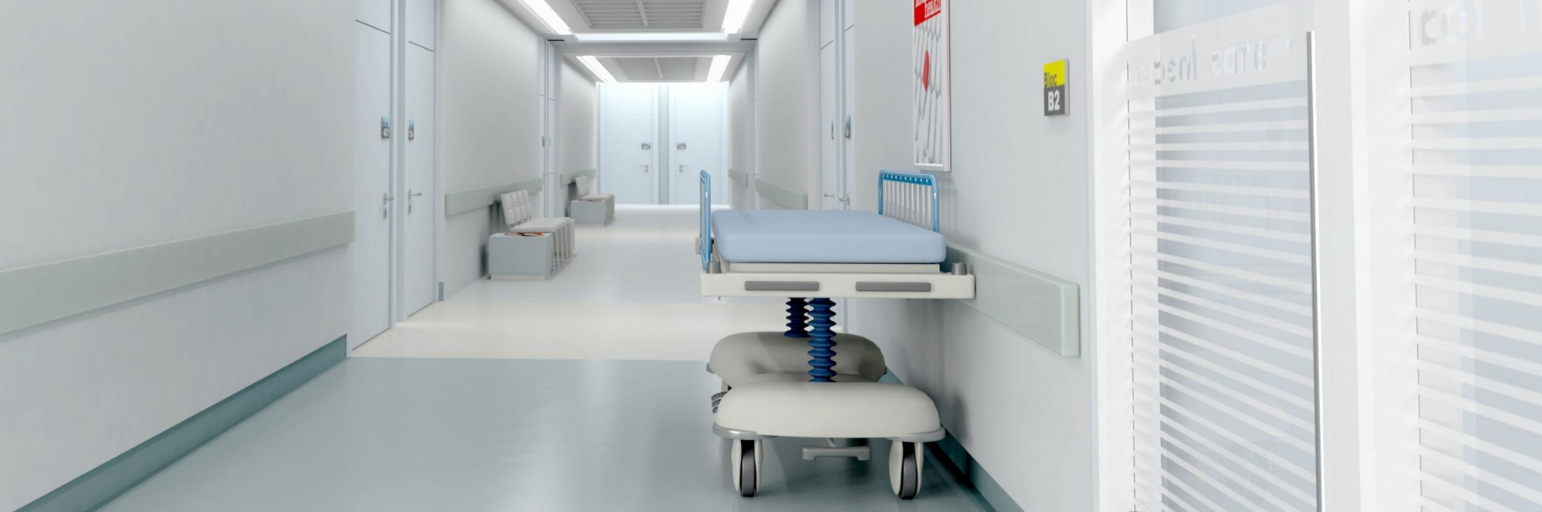
For operating rooms with specific requirements, conductive flooring is preferred. Homogeneous rolled PVC floors with conductivity values between 10⁴ – 10⁶ Ω are used. In high-traffic areas such as emergency zones where stretchers and wheelchairs are frequently used, slip-resistant R10-class products are preferred.
Commercial rolled PVC flooring is the most widely preferred due to its wide range of colors and patterns and the variety of products that serve different hospital functions.
-
Rubber
Rubber enhances healthcare interiors with easy installation, exceptional durability, and versatile design options. Its dense surface provides a comfortable floor. Before the wide adoption of PVC materials, rubber was one of the most preferred alternatives.
The needs of corridors and common areas, which serve as the main arteries of medical facilities, can be met with rubber. Corridors experience heavy pedestrian traffic, and these areas are constantly crossed by heavy loads like stretchers and wheelchairs. Rubber’s durability makes it an important flooring option in healthcare facilities. -
Linoleum
Another alternative to vinyl and rubber is linoleum. Among flexible flooring options, linoleum stands out as a natural material. It is a more sustainable option. Thanks to its antibacterial properties, it is widely used in patient rooms and is available in a broad range of warm colors and patterns. -
Carpet
Carpets are one of the flooring types preferred for commercial spaces. In healthcare facilities, they are chosen because they act as indoor air filters, trapping pathogens within their fibers and preventing dust and allergens from circulating in the air. However, in 24/7 high-traffic healthcare environments, carpets must be maintained properly to perform their function effectively. Carpets are more commonly preferred in administrative areas of healthcare facilities. Detailed information about carpets can be found in our blog post titled “Common Misconceptions About Carpets.”
Keeping floors in healthcare facilities safe and clean is more important than it may seem. It is essential to have a general understanding of which products should be used, how they should be installed, and how they should be maintained.
Discover